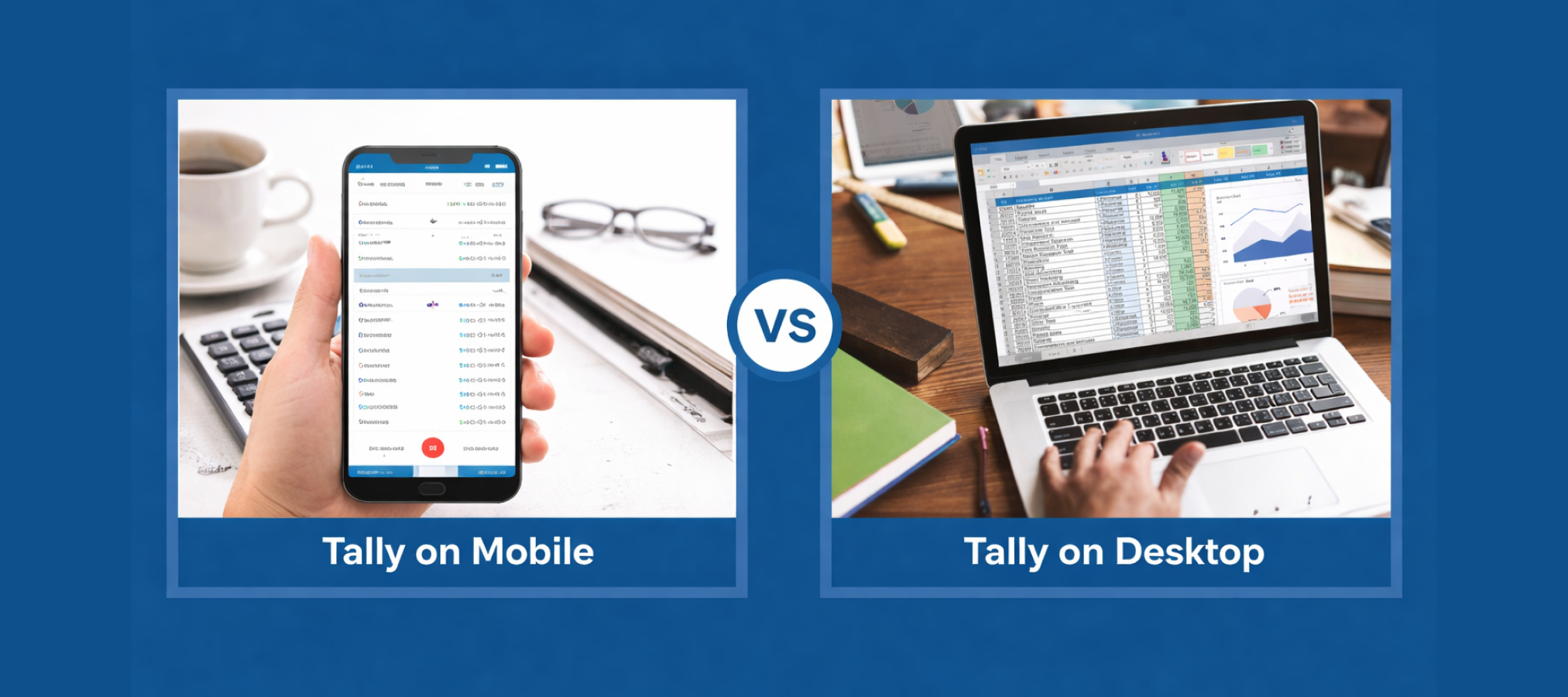




As businesses grow, their operational needs evolve. What once worked for a small setup may no longer be efficient when the business expands. This is especially true for accounting systems, where increasing transactions, multiple users, and real-time access become essential.
Many businesses start with a single-user accounting setup, which works well in the initial stages. However, as teams grow and operations become more complex, limitations begin to appear. This is when upgrading becomes not just an option, but a necessity.
Understanding the difference between Tally Prime Silver and Tally Prime Gold helps businesses make the right decision at the right time. While one is designed for single-user access, the other supports multiple users working simultaneously, making it ideal for growing organizations.
Understanding Single User vs Multi User in Tally
In the early stages of a business, accounting tasks are usually handled by one person or a small team working on a single system. This is where Tally Prime Silver is commonly used.
On the other hand, as businesses expand, multiple team members need access to accounting data at the same time. This is where Tally Prime Gold becomes important, as it allows multiple users to work simultaneously within the same system.
The core difference lies in accessibility and collaboration. While single-user mode limits operations to one system at a time, multi-user mode enables teamwork and efficiency.
What is Tally Prime Silver?
Tally Prime Silver is designed for single-user environments. It is suitable for small businesses where accounting tasks are handled by one person or from one system.
It provides all essential features required for accounting, including:
- Recording transactions
- Generating financial reports
- Managing GST compliance
For startups or small businesses, this version is often sufficient in the beginning. It is simple, cost-effective, and easy to manage.
However, as business operations grow, relying on a single system can become a limitation.
What is Tally Prime Gold?
Tally Prime Gold is the multi-user version of Tally Prime. It is designed for businesses where multiple users need access to the system at the same time.
This version allows different team members to work simultaneously on accounting tasks such as data entry, reporting, and inventory management.
It is especially useful for businesses with multiple departments or higher transaction volumes. With multi-user access, work becomes faster, more efficient, and better coordinated.
Signs Your Business Needs an Upgrade
Many businesses continue using a single-user system even after they have outgrown it. This can lead to inefficiencies and delays.
Here are some common signs that indicate it’s time to upgrade:
- Multiple employees need access to accounting data
- Work gets delayed because only one user can operate the system
- Increased transaction volume makes single-user access slow
- Difficulty in coordinating between departments
- Frequent dependency on one person for accounting tasks
When these challenges start affecting daily operations, upgrading becomes essential.
How Multi User Access Improves Efficiency
One of the biggest advantages of upgrading is improved efficiency. With multiple users working simultaneously, tasks can be completed faster.
For example, one team member can handle data entry while another generates reports at the same time. This reduces waiting time and improves productivity.
It also allows better coordination between departments such as sales, accounts, and management. Everyone can access the required information without delays.
Better Control and Real-Time Visibility
As businesses grow, decision-making becomes more complex. Owners and managers need real-time access to financial data to make informed decisions.
Multi-user systems provide better visibility by allowing multiple stakeholders to access data simultaneously. This ensures that everyone is working with the latest information.
It also improves control over operations, as management can monitor activities without depending on a single user.
Supporting Business Expansion
Growth often brings new challenges such as additional branches, increased workforce, and higher transaction volumes.
A single-user system is not designed to handle such complexity. Upgrading to a multi-user system ensures that the accounting infrastructure can support expansion.
This makes it easier to manage larger operations without facing system limitations.
Reducing Dependency on a Single User
One of the biggest risks of a single-user system is dependency. If the person handling accounts is unavailable, work can come to a halt.
With a multi-user setup, multiple team members can access the system. This reduces dependency and ensures continuity in operations.
It also allows better distribution of work, improving overall efficiency.
Data Security and Access Control
Many businesses assume that allowing multiple users may reduce security. However, multi-user systems actually offer better control.
Access rights can be defined for different users, ensuring that only authorized personnel can view or modify specific data.
This improves data security while still allowing flexibility in operations.
Cost vs Value of Upgrading
Some businesses hesitate to upgrade due to cost concerns. However, it is important to look at the value rather than just the cost.
The time saved, improved productivity, and better coordination often outweigh the initial investment.
In the long run, a multi-user system helps businesses operate more efficiently and supports growth.
When is the Right Time to Upgrade?
There is no fixed rule for when to upgrade, but timing is important.
The best time to upgrade is when:
- Your team starts growing
- Workload increases significantly
- Delays begin affecting productivity
- You need better coordination between departments
Upgrading at the right time ensures smooth transition without disrupting operations.
How Siddh Softwares Helps in Upgrade
Siddh Softwares provides complete support for businesses looking to upgrade from single-user to multi-user systems.
They assist with evaluating requirements, upgrading licenses, setting up the system, and ensuring smooth transition without data loss.
Their expertise ensures that businesses can move to a multi-user environment without facing technical challenges.
Conclusion
As businesses grow, their accounting needs become more complex. A system that worked in the early stages may no longer be sufficient.
Understanding the difference between Tally Prime Silver and Tally Prime Gold helps businesses make informed decisions. While single-user systems are suitable for small setups, multi-user systems are essential for growth and efficiency.
Upgrading at the right time ensures that businesses can handle increased workload, improve collaboration, and make better decisions.
In the long run, moving to a multi-user system is not just an upgrade—it is a step towards building a more scalable and efficient business.